

Solving the plastic soy sauce fish riddle – banning, recycling or redesigning?
Jul 29, 2026
I’m taking a moment, to unpack Australia's most offensive fish for you
It’s that little, plastic pervasive piece of packaging you grab with your sushi to drench it in salty soy sauce goodness – and it’s relatively unique to Australia.
Sure, it’s convenient and kind of cute – but start up a conversation about litter and plastic waste – and it’s sure to fire up a hearty conversation.
It’s gaining attention, coupled with a few myths about where they’re permitted, and not – so here’s a rundown, and I’ll throw in some insight into other solutions.
First, let’s set the record straight on bans.
Single use plastic bans are administered separately, via the States and Territories, and they all differ (sigh). They all do align up with the 2025 national target* to phase out unnecessary single use plastic packaging.
In terms of leadership - I’ve often said if there were ever a ‘Waste prevention State of Origin’ – it would be SA vs NSW, I’ve watched both States interchangeably lead on circular policy over the years.
Here’s the go.
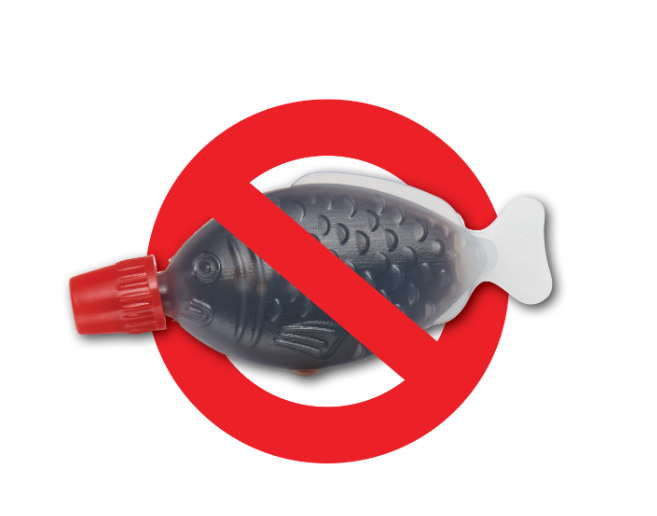
Image credit: South Australian Government
It’s official - South Australia banned the country’s most offensive fish
The South Australian Government previously banned many single use plastic items.
But they went the next mile (again … show-offs!) and extended their prohibition* list in September 2025 to ban plastic soy sauce fish containers.
They've taken the time to articulate this includes other shaped containers too – so you can’t manufacture a plastic soy sauce monkey shape and call the problem solved.
Good job on the fine print SA! You thought that through.
It should be noted that sachets are not banned though - below is an image of what is still permitted.
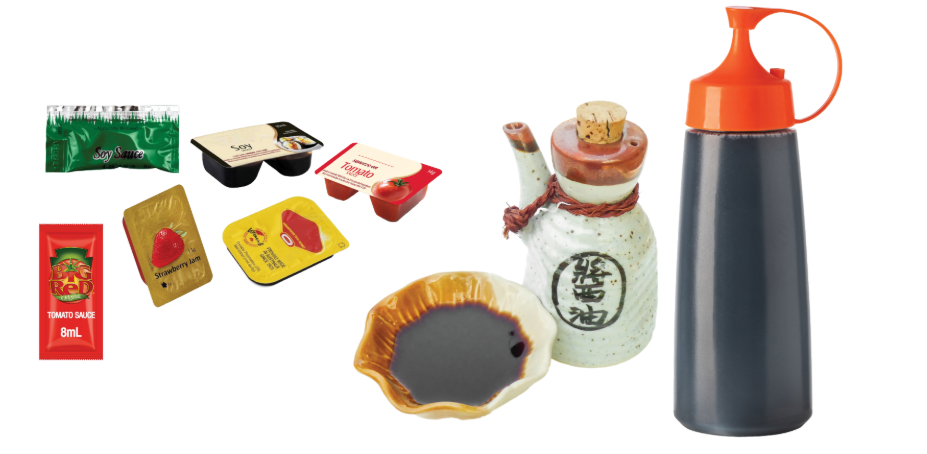
Above: what is still permitted in South Australia (Image credit: SA Government)
NSW had a crack – but did not outright ban plastic soy sauce fish
NSW had also implemented bans on single use plastic, and in late 2025, released its updated Plastics Plan 2.0, which included single use plastic phase outs ie bans, reuse policy, improving recyclability - you can read more of my analysis very soon – watch this space.
The plastic soy sauce fish was identified and addressed in the plan - and it's important to note, it is not in the phase out section, it features in the ...*drum roll* design for recycling section.
I honestly can't get my head around the NSW intention and wording for these little suckers.
The plan says, and I quote:
‘Items that are currently not recyclable - such as plastic soy-sauce fish, which are too small to be recycled - will not be allowed unless they are redesigned for recycling’
That sounds nice – but here’s the implementation reality:
• The whole point of said menace plastic fish, is that you have a convenient, transportable, small serving of soy sauce, for on the go
• Small items are problematic in recycling systems - as they're broadly designed to take items (> 5cm as a general rule) which actually have markets to purchase the material after it is sorted, that’s how the economics work
• Even if you redesigned these packages to be a single material, and the lid tethered, like beverage containers in Europe - they'll still be too small, and contaminated with soy sauce, which is problematic in recycling systems
• If you manufactured them to be larger, you'll likely create food waste with unused soy sauce - another environmental hazard
The plan says that this rule will comeinto play from January 2030, so at least there's a few years to watch this play out.
It’s one of those wicked problems, and when you break it down – there’s nowhere to run, and nowhere to hide.
Where to from here? Solutions in action
Recently in the heartbeat of Melbourne, I stopped for lunch on the go in Southern Cross Train Station, and saw what I have long thought is a simple solution, right there on the bench. A soy sauce dispenser for customers.
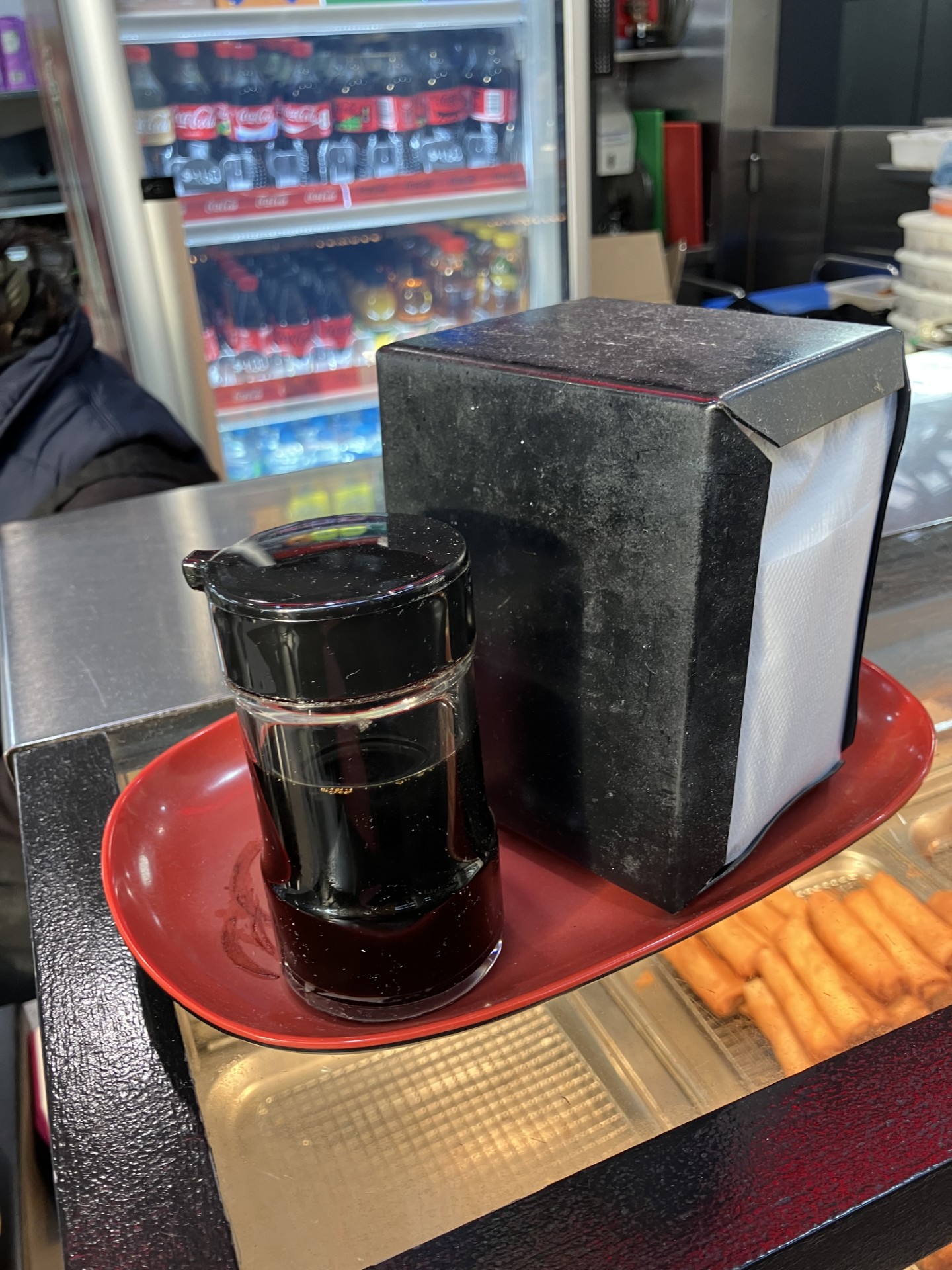
The premise is simple: buy your sushi and tip some soy on before you leave, no need to unscrew caps etc – just tip, and hustle off to your train or meeting. And yep, whilst travelling, I do tend to forgot my BYO container.
The bottle appeared to be glass and refillable, so presumably the retailer has a larger container they can decant into it, it would be interesting to understand if this is also cheaper for them too.
Imagine if we just mandated that retailers need to offer this, across Australia?That would surely wipe part of the problem out, whilst driving reuse as the norm in business and community.
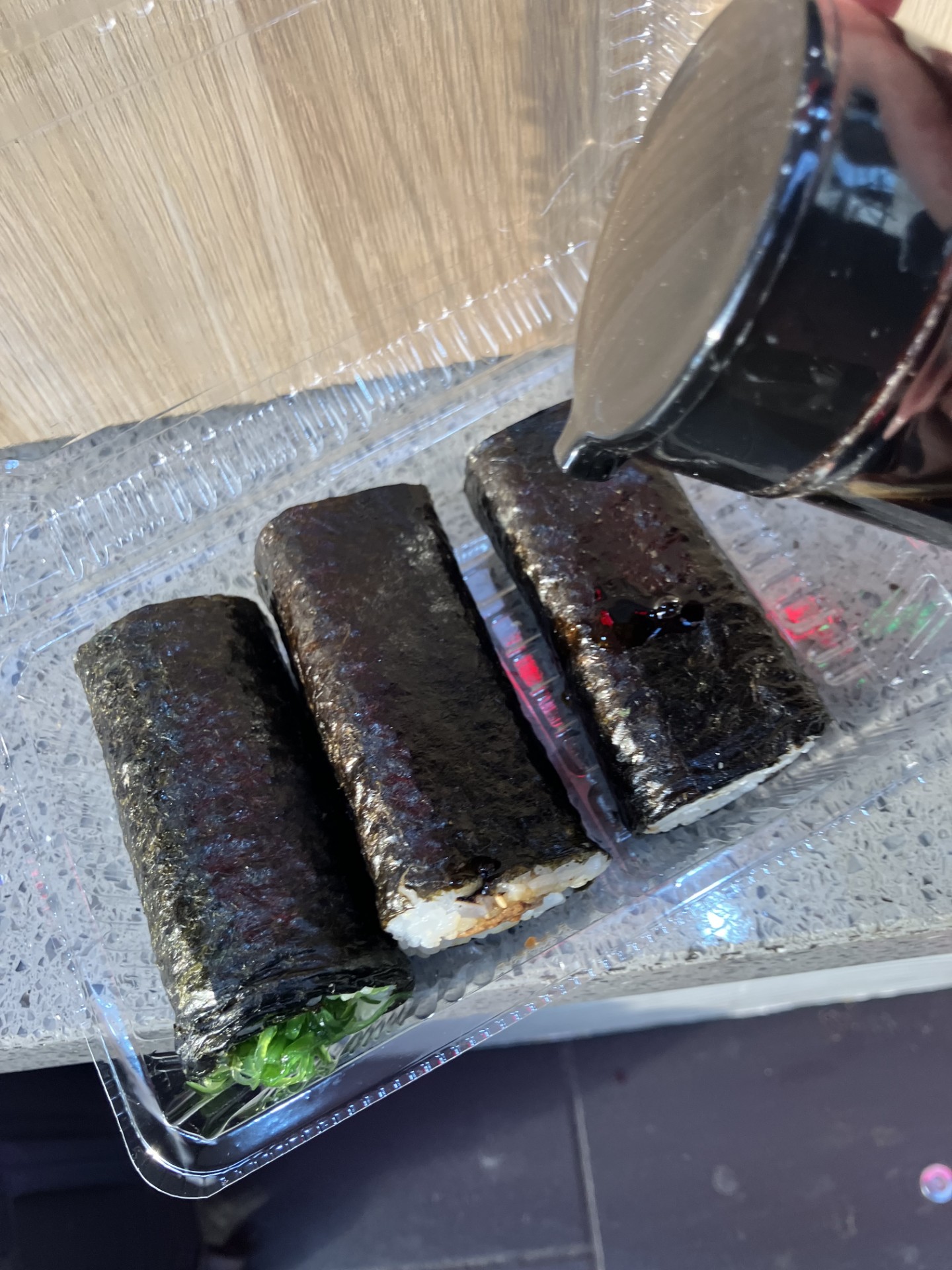
Scratching the itch for the grab and go – redesigning plastic out
But, it’s true we’re accustomed to being able to take the soy away, and so others can control how much is applied.
Recently, the beautifully designed Holy Carp solution splashed onto the market, and was even trialled amongst retailers in Manly, Sydney during Plastic Free July.
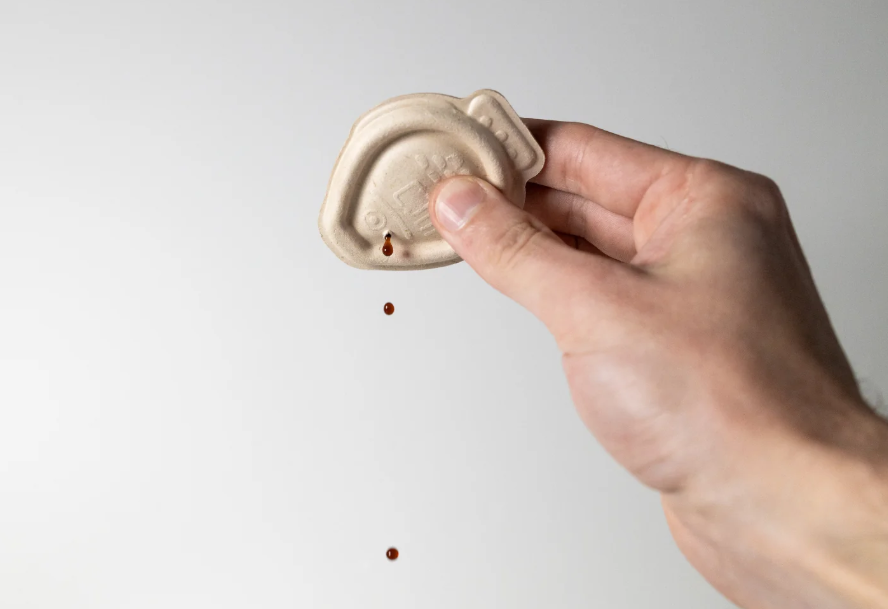
Above: Holy Carp in action (Image credit: Heliograf)
According to the internet - it substitutes the plastic for bagasse, a by-product of sugar production, and is mixed with a food-safe wax, to make it liquid proof.
I think material substitution has its place, alongside reuse in reducing waste and pollution, but the application of alternate materials needs consideration within the context of the product’s ecosystem.
For this product my initial questions are - does the bagasse originate in Australia?
What does happen when they reach an environment like a street gutter, a park or the beach? How long would it take for them to break down? Would they be in any way hazardous to wildlife?
Some media reports label them as ‘reusable’* – but so far, I haven’t found an explanation for this.
And also – how does the NSW EPA view these products – food, or packaging?
This is really important in NSW, because all compostable packaging (aside certified liners) is banned in commercial food waste services (‘FOGO’), which are being mandated*
This is because CSIRO* testing found that compostable packaging, widely available at the time, is not safe to apply on our agricultural systems.
If these are seen as ‘packaging’ – even if their composition differs from the ‘nasties’ - they are technically not allowed in the commercial food waste – and have no home except landfill or home composting bins, if people choose.
>>>
Well, it’s quite the kettle of fish, as you’d appreciate.
I look forward to this archaic plastic packaging, designed in the 1950s, being solved at a systems level.
Until then, I’ll keep up my usual efforts of saving ‘sushi day’ for when I’m at home or the office – and I know soy in a bottle is available, keep encouraging my clients to provide reusable solutions at their businesses and events – and finally, picking these bad boys up when I hit the streets or beach.
>>>
Hi, I'm Bel Chellingworth, a circular economy consultant, educator and speaker.
For over 25 years, I've helped business, government, and community reduce waste via product stewardship, procurement, systems design and education - with an unshakeable dedication to sound governance, data and a sense of fun.
I'd love to help you too! Get in touch if you need circular assistance.
>>>
References
Australia’s 2025 national packaging targets
https://apco.org.au/national-packaging-targets
South Australia single use bans
https://www.replacethewaste.sa.gov.au/guideline-2025-bans
NSW Plastics Plan 2.0
https://www.epa.nsw.gov.au/Your-environment/Plastics/plastics-plan-20
Holy Carp - Reusable?
Holy Carp
https://heliograf.com/pages/holy-carp
CSIRO Research on FOGO
NSW FOGO Mandates for Business and Community
Images
These are either my own, captioned, or otherwise - credited to the South Australian Government.
Stay connected with news and updates!
Join our mailing list to receive the latest news and updates from our team.
Don't worry, your information will not be shared.
We hate SPAM. We will never sell your information, for any reason.
