
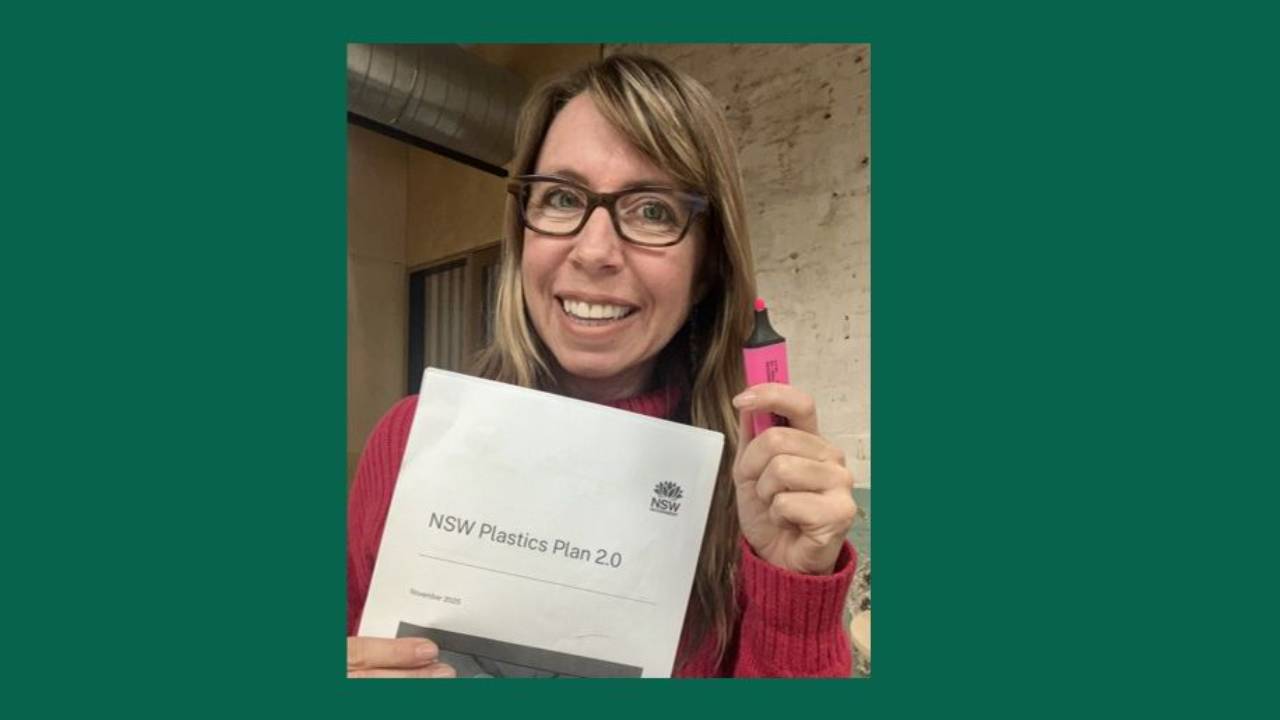
The NSW Plastics Plan 2.0 Explained
Aug 17, 2026The NSW Government released its Plastics Plan 2.0 - setting out the next wave of bans, regulations and initiatives designed to tackle plastic waste across the state.
There’s a lot in it. More single-use plastic ('SUP') bans, some reuse initatives, initatives targeting litter, microplastics, chemicals of concern - and of course recyclability take the stage.
There’s some real goodies in this plan, but there's some things to question, some things to clarify and sadly - some missed opportunity.
Here’s my take on what’s inside, after reading the fine print.
Thinking like a State Government
It's important to set the scene, this plan has been developed by a State Government, so naturally it focuses on the issues it has the power, responsibility and policy levers to address.
It acknowledges they're playing 'catch up' on banning some SUPs with other States and territories, but also have ambition to lead.
It was interesting analysing their 'why' - the themes are repeated throughout the document:
1. Litter and microplastics
2. Toxins and chemicals - in humans, soil and recycling streams
3. Keeping recycling and FOGO streams clean
And somewhat mentioned but not as extensively - lack of recyclability and landfill reaching capacity.
These are compelling reasons, but they're the consequences, the reactive, the 'end of pipe' problems for plastics.
The impacts of material extraction it is referred to once, but that’s it - not mentioned as a key issue. I can see why, as for NSW Government that's possibly an 'upstream overseas issue.'
Waterways littered with plastic soy sauce fish, and poisoned soil, however, well, that's absolutely their problem.
I'll elaborate at the end of the article why an end of life lens doesn't tackle the issue at a systems level.
For now, I'll say that's why the old 'reduce, reuse, recycle' hierarchy stands the test of time - it was based on scientific principles looking at the whole lifecycle materials are used over.
That said, back to the plan.
What's being phased out?
The lineup includes plastic confectionary sticks, plastics with additives e.g. oxo/ photos and landfill-degradable plastics, products with microbeads, plastic bags with handles (reusables made from synthetics / barrier bags exempt), plastic pizza savers, plastic fruit and veg stickers, plastic balloon sticks and ties, loose / void fill expanded polystyrene (EPS), and food supply and service EPS.
There's also commitment to working with other States and Territories on an approach to regulating cigarette butts.
Reuse makes an appearance - woohoo!
Finally. Some of the policy I've been waiting 15 years for.
In amongst more SUP bans, it's refreshing to see reuse measures feature - including:
• 2026: Trials of reuse cup systems begin at government premises, including offices and stadiums.
• 2027: The launch of a flagship reuse-only precinct in the Sydney CBD.
• 2028: Every food service business in NSW will officially accept reusable cups from customers.
• 2030: Large takeaway providers will be required to offer reusable cups as part of a formal reuse system.
If you peak in the recyclability section of the plan, there are also plans to create a product stewardship scheme - like a container deposit scheme to accept cups and food containers for reuse (and recycling) at scale.
The whopping, great big missed opportunity
There was some low hanging fruit the NSW Government sadly missed in this plan. Ever been to a dine in restaurant, with staff, a large kitchen which would clearly have dishwashers - and your entire meal was served in single use packaging, then binned? Yeah, not an upper.
The policy opportunity would be to outright ban single use packaging being used in dine in settings.
And funnily enough, a week after I wrote this all up, I copped a single use cup, in a dine-in restaurant when I innocently ordered a peppermint tea instead of hitting the harder stuff with the crew.
Lesson learned. Should have got a Savvy B.
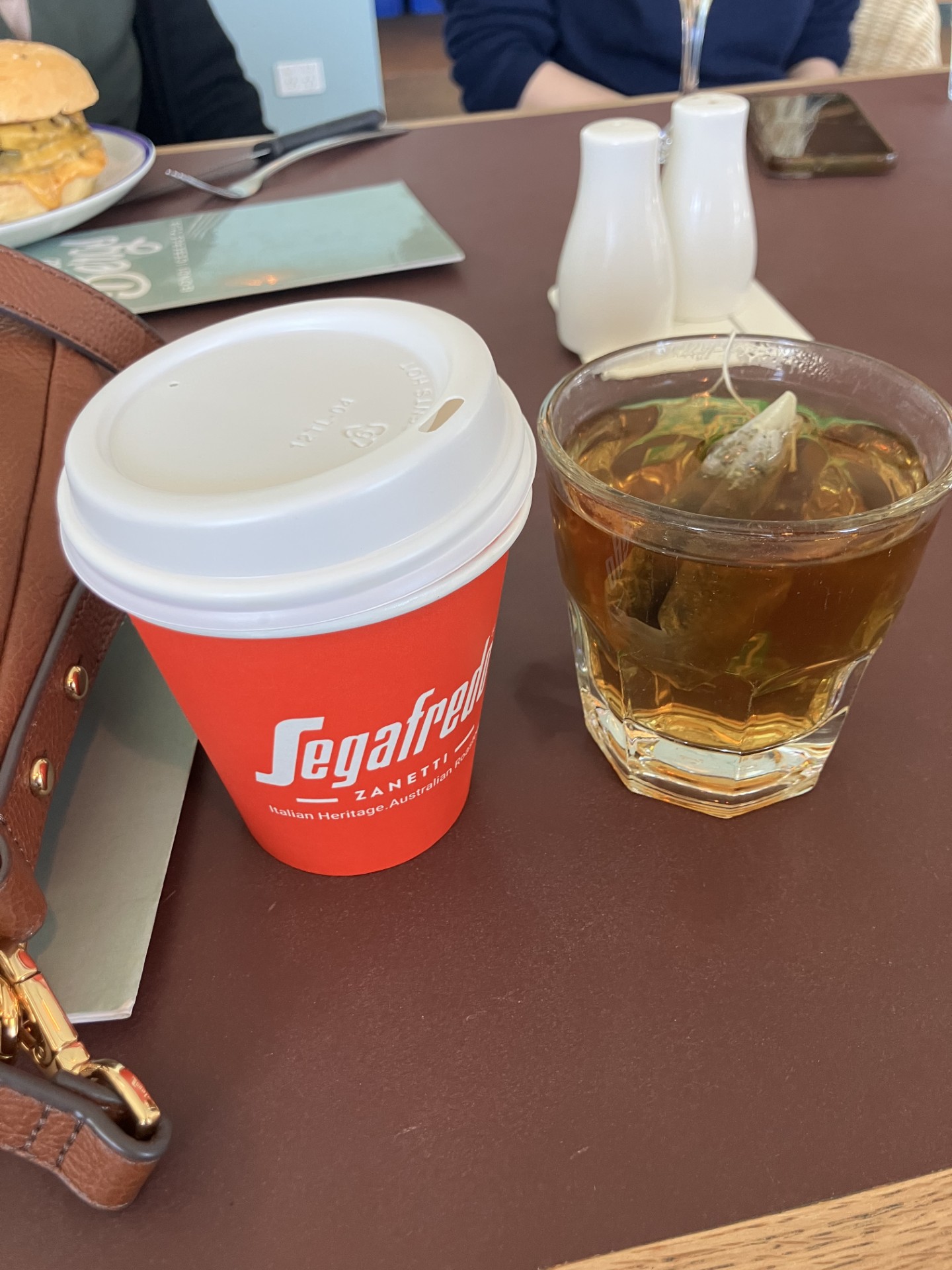
Above: Having a nice civilised Birthday lunch for a girlfriend, and cop this bad boy (actually, there were 2 of them!) because for some reason "tea and coffee aren't served in reusables" in this dine in restaurant. The humanity. I nabbed a water glass and improvised.
Having worked with the Hospitality sector on waste, there's likely some sort of marketing and partnership agreement at play ... and yes, I did politely write to said venue for a rationale behind the unwanted SUP spamming.
The plan's intentions to improve recyclability and collection systems
There's ambition to make single use plastic cups, food containers, lids and condiment packages to be designed for recycling.
Also - if you've been to Europe, you may have seen plastic lids attached to bottles made of the same material, and the same colour - they're coming to NSW too - commencing from December 2030. This will reduce litter, and unrecyclable plastic.
There's plans to create a product stewardship scheme - like a container deposit scheme to accept plastic takeaway cups and food containers for reuse and recycling at scale.
They've also noted in scheme design they'll need to discern if "a deposit is needed to incentivise return" - I would be genuinely shocked if said discernment found anything other than you do indeed need to place a financial incentive on items in public place settings, and also make return a smooth process.
The user needs to view these items as valuable, and easy to return, in order to have high reuse rates.
Now, something I'm often asked about are the little plastic soy sauce fish …
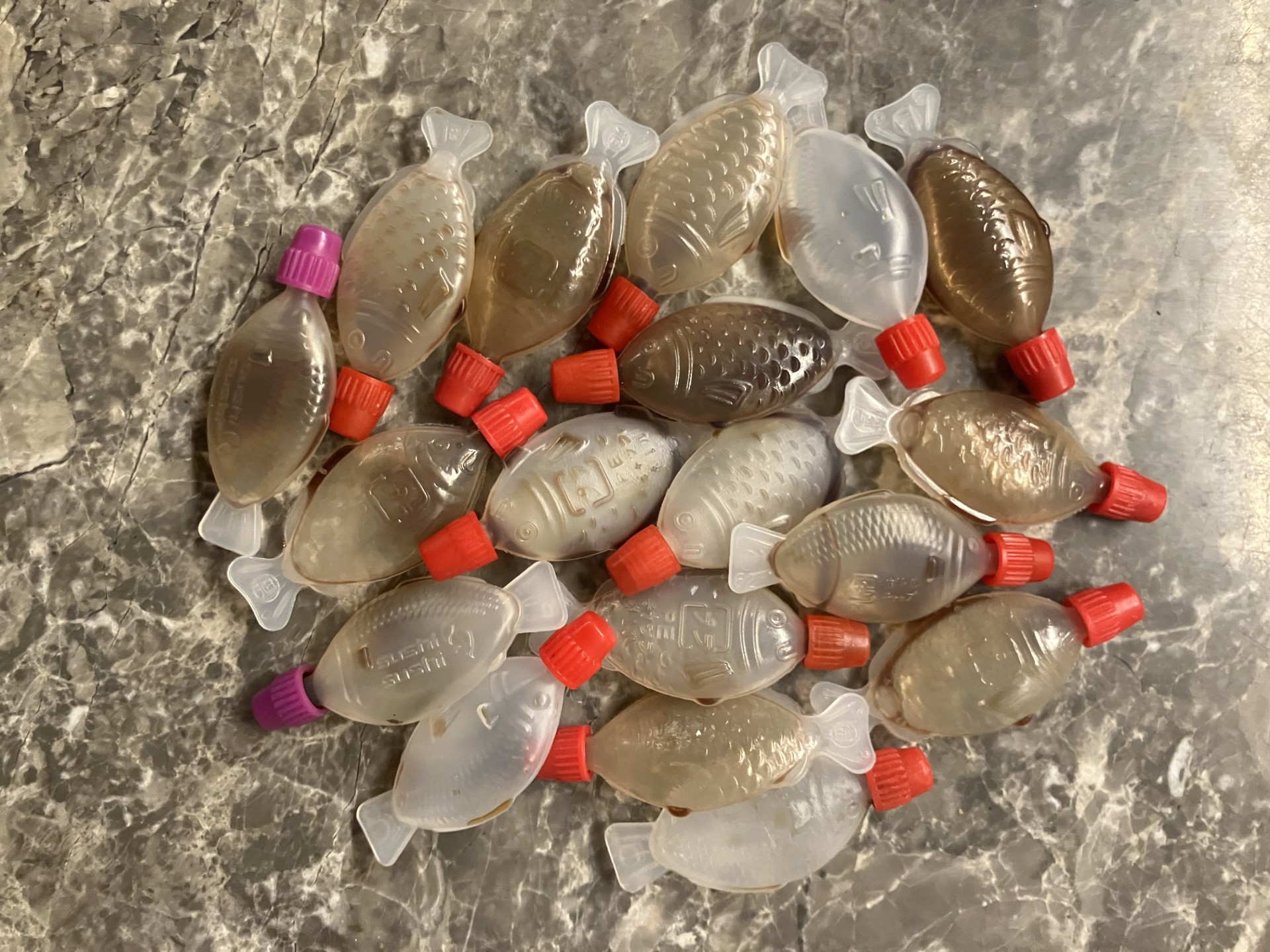
Above: Man those things have an impressive reproductive rate.
Tackling the soy sauce fish
There's a lot to say on this one - said menace fish is addressed in the plan, but not in the phase out section. It's in the design for recyclability section - I had to write a separate article on this one.
Go on a bit of a detour in you need, but at least we've dealt with that kettle of fish.
Helping us use disposal systems more effectively
The plan addresses the need to improve our disposal behaviour - which includes:
• Correct labelling of single use items
• Compostable produce sticker and liner manufacturers verifying claims against the ABA standards
• Exploring standards for recycling and landfill bins in high litter areas
And my personal favourite - which I'm bolding as a heading
From 2027, publish annual litter data, including brand name of littered items
Oooh yeah. Now we're talkn' - love a bit of transparency and accountability. To drive meaningful change, collaboratively, of course. Let the games begin!
Chemicals and microplastics
And to finish off, tackling the nasties like microplastics, chemicals of concern (phthalates and bisphenols) and PFAS by publishing a red list, requiring all new washing machines supplied in NSW to achieve a microfibre standard - following the development of a national standard (let's hope the Fed's aren’t faffing around then).
There's also a separate section outing the Government's position on compostable packaging, and why it is banned in NSW.
Well, there you have it. I'm disappointed the plan doesn't include more policy to 'turn off the tap' and mandate reuse where it makes sense.
For so long, we've completely missed the point on tackling waste
For a long time, the policy solve for our waste woes has been to increase recycling. And from policy settings, fall programs and grants and economic stimulation. And this gives the solution profile.
So understandably, recycling, is where most people's minds go.
And that's completely understandable.
The Australian recyclability rate for all plastics sits around 13%, and for packaging lingers a tad higher at 20%.
Recycling has a part to play, but as the promised silver bullet, these figures are demonstrable proof, it hasn’t worked.
What the NSW Plastics Plan 2.0, and much of the narrative in the waste and circularity space completely misses is an appreciation of material depletion and extraction, its impacts and the greenhouse gas emissions created by creating products in the first place.
The extraction and manufacturing of materials e.g. fibre from growing trees, plastics from oil and gas processes, glass and metals from ore and sanding mining or bioplastics grown from plants like sugar cane - is generally the largest component of its environmental impact, over its lifecycle, regardless of whether they're landfilled or recovered.
So you manufacture anything … so to speak - the damage is already done. You can consult publicly available life cycle assessments for a deeper dive.
What do you think?
References:
Stay connected with news and updates!
Join our mailing list to receive the latest news and updates from our team.
Don't worry, your information will not be shared.
We hate SPAM. We will never sell your information, for any reason.
